Wondering what is industrial automation and whether it matters to you? It is the use of control systems, machines and software to run industrial processes with minimal manual intervention.
This guide is part of our wider look at industrial services.
| Item | Value |
|---|---|
| Core idea | Control systems, machines, software and information technologies operating processes with minimal manual intervention |
| Practical pyramid | Five levels, from field devices up to enterprise planning |
| Bottom layer (Level 0) | Sensors, actuators, motors, valves and drives |
| Industrial robots installed (latest IFR figure) | 295,000 units, the highest annual total on record |
| China’s operational robot stock in 2024 | More than 2 million units, the largest of any country |
The definition comes from Wevolver’s automation guide and the robot figures from the International Federation of Robotics. Figures can change with each new report, so check the source before you rely on them.
Industrial automation in plain words
Picture a bottling line, a water treatment plant or a car body shop. In each, something has to measure what is happening, decide what to do, and then act. Automation hands those three jobs to equipment instead of a person standing at a valve or a switch.
It does not mean a factory with no people. People still design the system, set targets, watch dashboards, handle exceptions and repair equipment. What changes is that repetitive, fast or dangerous tasks are done by machines that follow programmed rules.
The scope is wide. One guide notes that it ranges from a single temperature control loop to an entire factory connected through sensors, programmable controllers, SCADA systems, manufacturing execution systems and enterprise planning software.
The basic building blocks
Most automated systems are assembled from a familiar set of parts. Knowing the names makes supplier conversations and job descriptions much easier to follow.
- Sensors measure conditions such as temperature, pressure, position or flow.
- Actuators turn a control decision into physical action, for example by opening a valve or turning a motor.
- PLCs (programmable logic controllers) read the sensors, follow their program and steer the devices directly.
- HMIs (human-machine interfaces) are the screens operators use to see and adjust what a machine is doing.
- SCADA software gives operators supervision, trend views and alarms across many machines or sites.
- Drives control how fast and how hard a motor runs.
- Industrial networks carry signals between all of the above.
Sources also list distributed control systems (DCS), common in continuous process plants, and industrial robots among the core technologies.
How the layers fit together
A common way to picture a plant is the automation pyramid. The practical version has five levels, and each one talks mainly to the level directly above and below it.
- Field level: sensors, actuators, motors and valves doing the physical work.
- Control level: PLCs and similar controllers running real-time logic.
- Supervision level: SCADA and HMI systems for visualisation and data logging.
- Planning level: manufacturing execution systems that schedule and track production.
- Enterprise level: business planning software such as ERP.
Level names vary between sources, and some engineers argue that cloud and industrial internet-of-things systems are loosening the strict hierarchy. Treat the pyramid as a teaching map, not a rulebook.
Where robots fit in
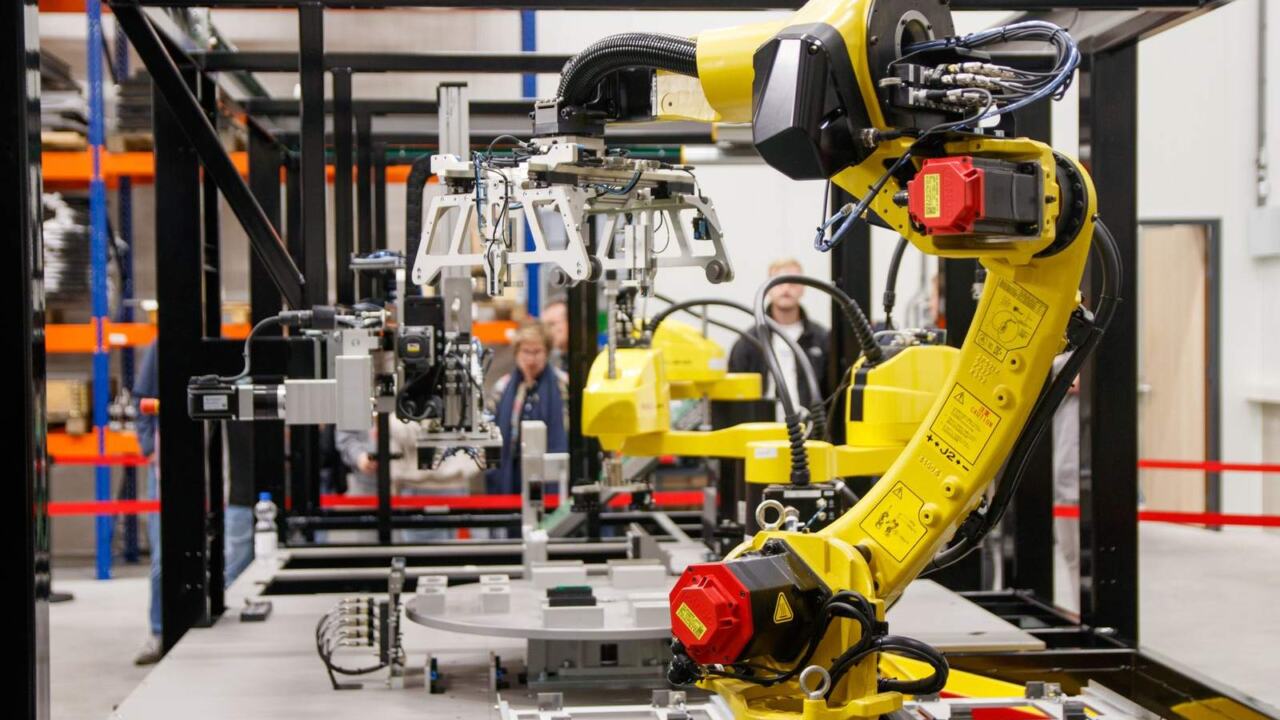
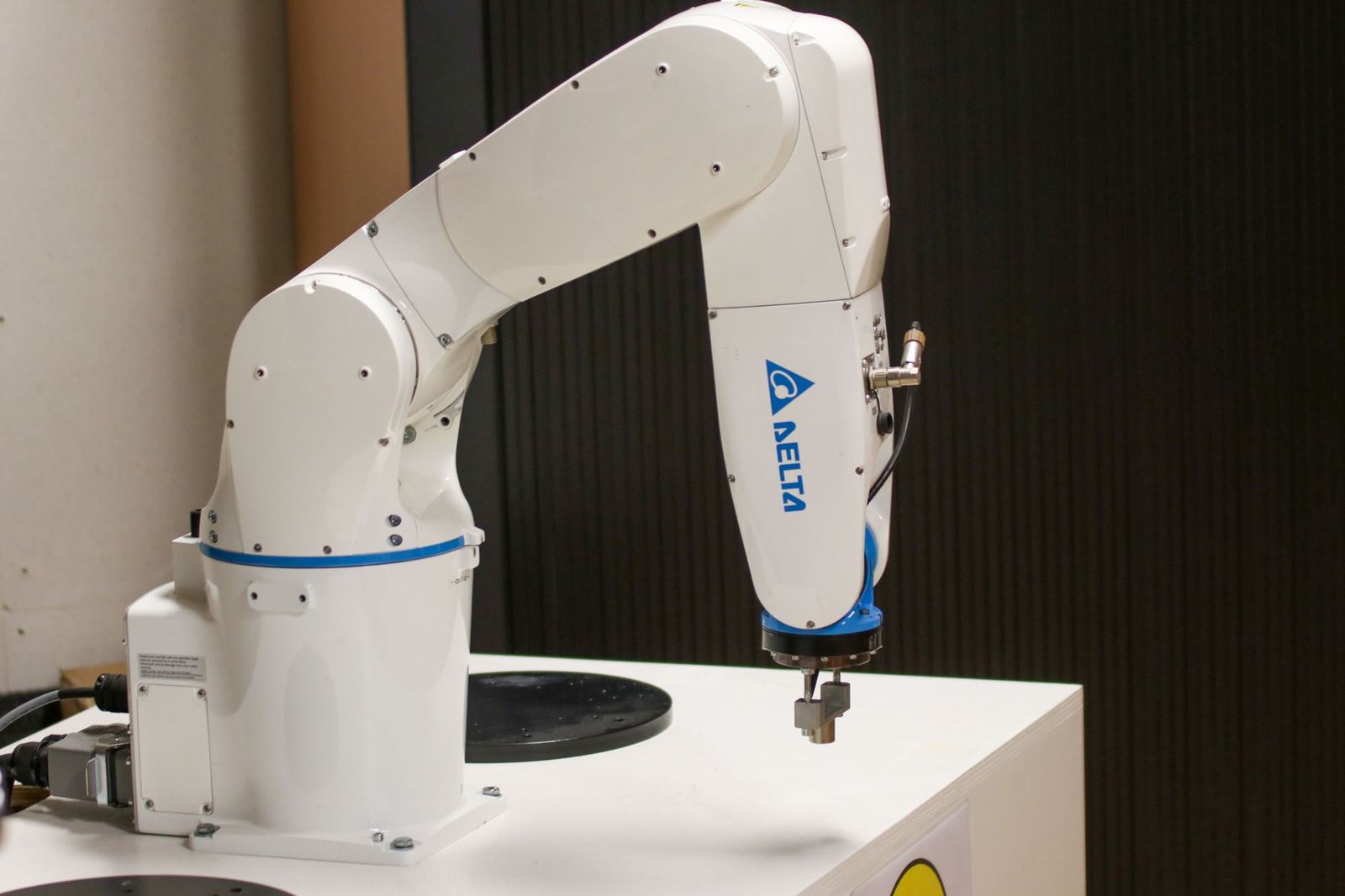
Robots are the most visible form of automation, but they are only one part of it. A conveyor controlled by a PLC and a few sensors is automation too, with no robot arm in sight.
Still, robot numbers show how fast adoption is moving. The International Federation of Robotics reported in its World Robotics 2025 release that 295,000 industrial robots had been installed, the highest annual total on record. It also reported that China’s operational stock exceeded 2 million units that year, the largest of any country.
Those figures cover robots only. They say nothing about the far larger base of controllers, sensors and drives that run quietly behind them.
Why businesses automate
The reasons are usually practical rather than futuristic. Typical goals include:
- Consistency: a machine repeats the same task the same way each time, which helps quality.
- Safety: equipment can take over hot, heavy or hazardous work.
- Data: connected devices record what happened, which supports troubleshooting and planning.
- Throughput: machines can run continuously without fatigue.
There are trade-offs. Automation needs upfront engineering, skilled people to program and maintain it, and attention to network security, because connected control systems can be a target.
Everyday examples by setting
The same building blocks appear in very different workplaces. Seeing them in context helps the jargon make sense.
- Food and beverage: sensors check fill levels, a PLC times the filling and capping, and an HMI lets the operator change recipes or speeds.
- Water and utilities: SCADA systems monitor and control assets spread over a wide area, such as pumping stations, from one control room.
- Automotive assembly: robots weld and handle parts, while controllers keep every station in step with the line.
- Warehousing: conveyors, scanners and sorting equipment route packages with little manual handling.
In every case the pattern is the same: measure, decide, act, and report back to a person who can intervene.
Common misunderstandings
A few ideas come up again and again, and they can lead a buyer or a new employee astray.
- Automation is all or nothing. Many sites automate one step, such as a packing station, and leave the rest manual.
- Software alone is automation. Without sensors and actuators there is nothing to connect to the physical process.
- Once installed, it runs itself. Programs, settings and hardware all need ongoing care.
- Every vendor’s parts work together. The same guide says field devices, controllers, HMIs, SCADA, MES and ERP systems must exchange data with the right timing, integrity and security, so compatibility deserves a check.
Questions to ask before you automate
If you are weighing a project, start with the process rather than the equipment. Keep in mind that connecting operational technology to networks also introduces cybersecurity requirements.
- Which task is repetitive, risky or a bottleneck today?
- What data do you need to measure, and where will it be stored?
- Who will maintain the system after it is installed?
- How will it connect to existing machines and business software?
- What happens when it fails, and is there a safe manual fallback?
This site is independent and educational. It does not sell automation services or give project advice, so use these questions as a checklist when you talk to qualified engineers.
Automation and maintenance
Once equipment is automated, keeping it healthy becomes a bigger job, because one failed sensor or drive can stop a whole line. Sensor data also makes smarter upkeep possible. If you want to compare the two main approaches, read about predictive vs preventive maintenance.
Spare parts and consumables matter as well. For the supply side, see our explainer on what is MRO in industrial supply.
Frequently asked questions
Is industrial automation the same as robotics?
Show answer
No. Robotics is one branch. Automation also covers sensors, PLCs, SCADA, drives and networks that run processes without any robot.
What does a PLC do?
Show answer
A PLC monitors inputs from sensors, runs its stored program and directly steers connected devices such as motors and valves.
What is the difference between PLC and SCADA?
Show answer
A PLC controls equipment directly at the control level. SCADA sits above it and gives operators oversight, trends and alarms across many controllers.
Does automation remove all human work?
Show answer
No. People still design, supervise, maintain and improve automated systems and handle situations the programming does not cover.