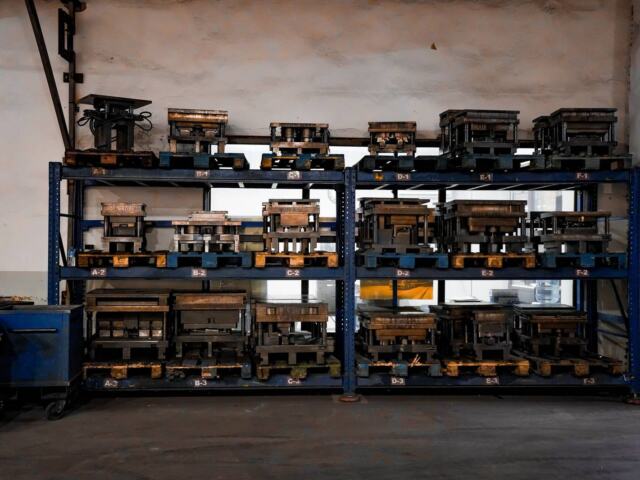
Trying to make sense of what plants buy from outside firms? Industrial services are the specialist support jobs that keep factories, refineries and plants running: maintenance, cleaning, safety, automation, supply and more. Here is how they fit together for you.
| Item | Value |
|---|---|
| Predictive maintenance vs a typical preventive program (DOE guide, as reported by HFM) | 8% to 12% lower maintenance costs |
| Possible savings depending on reliance on reactive maintenance | Could exceed 30% to 40% |
| Breakdown decrease reported in industry studies | 70% to 75% |
| Downtime reduction reported in industry studies | 35% to 45% |
| OSHA process safety compliance audit interval | At least every three years |
| Process hazard analysis revalidation interval | At least every five years |
Maintenance figures come from HFM Magazine’s summary of the US Department of Energy guide, and the audit intervals from OSHA’s 1910.119 text. Figures and rules can change, so check the source before you rely on them.
What industrial services actually are
Industrial services are work performed for industrial customers rather than consumers. The buyer is a plant, mill, refinery, warehouse or factory, and the provider brings people, equipment or know-how the site does not keep in-house.
Most plants do not employ specialists for every task. A food factory does not need a full-time crane inspector, and a chemical site does not need a standing crew for tank cleaning. Outside firms fill those gaps, often only when a job comes up.
This site is an independent educational guide. It is not affiliated with any provider, agency or standards body named here, and it does not sell services or take enquiries. The aim is to help you understand the field so you can ask better questions of whoever you hire.
The category is broad, so it helps to group it by what the work protects:
- Assets: keeping machines and structures working (maintenance, repair, inspection, turnarounds).
- People and compliance: keeping workers safe and the site within the rules (safety audits, training, process safety).
- Output: making production faster, steadier or cheaper (automation, contract manufacturing, logistics).
- Environment and cleanliness: removing waste, residue and contamination (industrial cleaning, waste handling).
- Supply: getting spare parts and consumables to the right place at the right time.

The main types of industrial services
No single list is official, and providers label their work in different ways. The groups below are the ones you meet most often when you read tenders, contracts or job descriptions.
Maintenance and repair
This group covers routine servicing, fault finding, repairs, lubrication, alignment and the replacement of worn parts. For a full walk-through, read what are industrial maintenance services.
Inspection, testing and certification
Pressure vessels, lifting gear, electrical systems and structures all need checks by qualified people. The results feed maintenance plans and prove to insurers and regulators that equipment is fit for use.
Shutdowns and turnarounds
Large plants plan periods when a unit stops so major work can be done at once. This brings in large numbers of contract workers for a short window, which is why planning matters so much. See what is a plant turnaround for the detail.
Cleaning and waste
Industrial cleaning goes well beyond mopping. It includes tank and vessel cleaning, high-pressure washing, vacuum loading and removal of process residues. Our guide to industrial cleaning services covers the main methods.
Automation and controls
Integrators design, install and support control systems, sensors, robots and software. If the term is new to you, start with what is industrial automation.
Supply and manufacturing support
Plants also buy spare parts, tools and consumables through specialist distributors, and some outsource production itself. Two useful starting points are what is MRO in industrial supply and what is contract manufacturing.
Why plants outsource this work
Outsourcing is rarely about one reason. Most plants weigh several at once, and the balance changes with the size of the site and the type of work.
- Specialist skills: rope access, non-destructive testing, high-voltage work and tank entry need training and kit that rarely justify a permanent team.
- Flexible capacity: demand for labour spikes during a shutdown and falls afterwards. Contractors let a site scale up and down.
- Equipment: cranes, hydro-blasting units, thermal cameras and diagnostic tools are costly to own and idle most of the year.
- Focus: operations staff can concentrate on running the process instead of side jobs.
- Accountability: a written scope and service levels give you something to measure against.
There are downsides too. Knowledge of your equipment can leave with a contractor, coordination takes management time, and a poorly written contract can leave gaps nobody owns. Good buyers keep an internal owner for each major service so the relationship does not run on autopilot.
Typical customers
Industrial services are bought across many sectors. Each has its own mix of needs:
- Chemicals and refining: heavy on inspection, turnarounds, process safety and specialist cleaning.
- Food and beverage: hygiene-driven cleaning, sanitary equipment servicing and line automation.
- Power and utilities: outage planning, boiler and turbine work, electrical testing.
- Metals and heavy manufacturing: machine repair, heavy lifting, rebuilds and wear-part supply.
- Logistics and warehousing: conveyor and sorting system support, forklift servicing, racking inspection.
How maintenance services work in practice
Maintenance is usually described in terms of when work happens relative to a failure. The simplest split is reactive, preventive and predictive.
- Reactive: you fix equipment after it breaks. It needs no planning, but failures tend to come at bad times and can stop production.
- Preventive: you service equipment on a fixed schedule, by calendar time or running hours, whether or not it shows a problem.
- Predictive: you monitor condition (vibration, temperature, oil quality, current draw) and act when the data shows wear is developing.
Most real programs mix all of these. Low-cost, non-critical items may be run to failure on purpose, while critical machines get closer monitoring. The trade-offs are explained in predictive vs preventive maintenance.
What the numbers suggest
A widely cited US Department of Energy guide, Operations and Maintenance Best Practices, Release 3.0, is summarised by HFM Magazine. According to that summary, the guide projects an 8% to 12% reduction in maintenance costs over a typical preventive maintenance program, as reported in HFM’s article.
The same article says that, depending on a facility’s reliance on reactive maintenance and material condition, savings could exceed 30% to 40%. It also says industry studies have indicated a 70% to 75% decrease in breakdowns and a 35% to 45% reduction in downtime.
Treat these as ranges from industry studies, not promises. Your own results depend on the equipment, how good your data is and how well the team acts on what the monitoring finds.
What a typical job looks like
A planned maintenance job usually follows a repeatable path. Understanding it makes contracts and quotes easier to read.
- Request or trigger: a schedule, a sensor alert, an inspection finding or a breakdown creates a work order.
- Planning: someone defines the task, the parts, the tools, the permits and the safe way to isolate the equipment.
- Scheduling: the job is fitted around production so that downtime is as short as possible.
- Execution: technicians carry out the work, record what they found and test the result.
- Close-out: the work order is closed, history is updated and any follow-up tasks are raised.
The close-out step matters. Without it, a plant cannot see which assets fail repeatedly, and predictive programs have no history to learn from.
Who does the work
Maintenance may be done by your own staff, by a contractor on site full time, or by a call-out firm. Some plants hand a whole maintenance function to one provider under a long contract, while others buy individual jobs. Each model shifts who carries the risk and who holds the knowledge of the equipment.

Safety and compliance services
Safety work is often bought as a service because it needs outside eyes and specialist training. Typical offerings include audits, risk assessments, permit-to-work systems, confined-space rescue standby and worker training.
A good starting tool is an industrial safety audit checklist. It helps you see what an audit covers before any outside auditor arrives.
Example: controlling hazardous energy
Maintenance is one of the riskiest moments in a plant, because machines are opened up while energy sources may still be live. In the United States, OSHA’s lockout/tagout rule addresses this. Its text says the standard applies to the control of energy during servicing and/or maintenance of machines and equipment, as published on OSHA’s 1910.147 page.
The same page refers to the employer’s energy control program. Where a device can be locked out, the program must use lockout unless the employer can show that tagout gives full protection.
Any contractor working on your site falls within this logic. Both sides need to agree who applies locks, who removes them and how the handover is recorded.
Example: process safety in chemical plants
Sites that handle highly hazardous chemicals face a more detailed rule, OSHA’s process safety management standard. Per OSHA’s 1910.119 text, employers must certify that they have evaluated compliance at least every three years. The process hazard analysis must be updated and revalidated at least every five years.
The same text states that its contractor provisions apply to contractors performing maintenance or repair, turnaround, major renovation, or specialty work on or adjacent to a covered process. In practice, that means hiring a contractor does not hand the safety duty to the contractor alone.
Rules differ by country, industry and site. This section is a general illustration of US federal requirements, not legal advice, and you should confirm which rules apply to your own operation.

Permits, training and records
Whatever the rule set, safe contract work usually rests on the same practical habits. Sites keep a record of who is on site, what they are doing and which hazards were discussed beforehand.
- A site induction before anyone starts work.
- A written permit for hot work, confined-space entry or work at height.
- Proof of training for the tasks being done.
- A named person who can stop the job.
- A debrief that records near misses and lessons.
These habits cost little compared with an incident, and they give auditors something concrete to check.
Technology, field work and management
Industrial services are changing as sensors, software and connected equipment spread. Condition monitoring, remote diagnostics and digital work orders now sit beside traditional hands-on trades.
Service teams that travel to customer sites need scheduling, parts, records and invoices handled well. That is the problem addressed by field service software, explained in what is field service management.
On the plant side, buying and managing these services is part of wider management practice. Our overview of industrial business management looks at that bigger picture, and digital transformation in manufacturing covers the technology shift.
Key terms you will meet in contracts
Industrial service contracts use shorthand that can confuse newcomers. These are the terms that come up most often.
- Scope of work: the written list of tasks, deliverables and exclusions the provider agrees to.
- Service level agreement: targets such as response time or availability, often with penalties or credits.
- Time and materials: billing by hours worked and parts used, which carries cost risk for the buyer.
- Lump sum: a fixed price for a defined scope, which shifts cost risk to the provider but makes changes expensive.
- Call-out: a one-off visit when something fails, as opposed to a planned schedule.
- Permit to work: a formal authorisation that records hazards and controls before risky work starts.
- Work order: the record that describes a task, who did it and what was found.
If a term in a quote is unclear, ask for it to be defined in the contract.
Planned and unplanned work
Providers price planned work and emergency work differently. Planned jobs can be scheduled, parts can be ordered in advance and crews can be used efficiently. Emergency work carries premium rates because people and parts must be found quickly.
A plant that spends most of its budget on emergencies is usually paying more for less. Moving some of that spend into inspection and scheduled servicing is the main goal of preventive and predictive programs.
How to choose and manage a service provider
This site does not recommend providers, but the questions below apply to nearly any industrial contract:
- Define the scope in writing. State what is included, what is excluded and what counts as finished.
- Check competence. Ask for trade qualifications, certifications and examples of similar jobs.
- Review safety performance. Look at their procedures, incident reporting and how they handle site induction.
- Agree how performance is measured. Use clear measures such as response time, repeat failures and completed work orders.
- Clarify responsibilities. Settle who supplies parts, tools, permits and supervision.
- Plan the handover. Make sure records, drawings and findings stay with you, not only with the contractor.
Price matters, but the cheapest quote can cost more if the scope is vague. Change orders, repeat visits and unplanned downtime often outweigh the saving on the first invoice.
Keeping the relationship healthy
Once a contract starts, regular contact matters more than the paperwork. Short, scheduled reviews keep small problems from growing.
- Hold a kickoff meeting so both sides agree on scope, contacts and safety rules.
- Review performance measures at a steady rhythm, monthly or quarterly depending on the work.
- Share equipment history so the provider is not starting from zero on each visit.
- Record lessons after each major job and feed them into the next plan.
- Revisit the scope when production, equipment or regulations change.
Treat the provider as part of the operation, not as an outsider who appears when something breaks. Sites that share information openly tend to get better results than sites that only communicate through invoices and complaints.
Measuring whether the service works
A service is only worth buying if you can tell whether it is doing its job. Pick a small set of measures that match the purpose of the work, and track them over time rather than in a single snapshot.
- Maintenance: unplanned downtime, repeat failures on the same asset and share of work done to plan.
- Safety: incidents, near misses reported and corrective actions closed on time.
- Cleaning: inspection pass rates, turnaround time per vessel and waste handled correctly.
- Automation: line availability, fault response time and quality rejects.
- Supply: parts available when needed, stock-outs and emergency purchases.
Numbers that rise after a service starts are not always bad news. More reported near misses, for example, often means people trust the reporting system.
Common mistakes
- Treating all maintenance as equal instead of ranking equipment by how critical it is.
- Collecting condition data and never acting on it.
- Leaving contractor safety to the contractor.
- Skipping a post-job review, so the same problems return.
Frequently asked questions
What are industrial services in simple terms?
Show answer
They are specialist jobs done for industrial sites, such as maintenance, inspection, cleaning, safety work, automation and parts supply. The customer is a business with plant and equipment, not a household.
Is every industrial service a maintenance service?
Show answer
No. Maintenance is only one group, and cleaning, safety audits, automation, supply and contract manufacturing are separate service types with their own skills and contracts.
Do predictive methods always beat preventive ones?
Show answer
Not always. The DOE guide as summarised by HFM reports savings ranges for predictive work, but the benefit depends on the equipment and on acting on the data. Low-value assets may not justify monitoring.
Who is responsible for safety when a contractor works on my site?
Show answer
Both parties have duties. Under OSHA’s process safety rule, for example, contractor provisions apply to work on or adjacent to a covered process, so the site owner still has obligations. Check the rules that apply where you operate.
Can this site hire a provider for me?
Show answer
No. It is an independent educational resource and does not sell services, take enquiries or offer consulting.