Unsure where to start with digital transformation in manufacturing? It means using data and connected tools to run your plant, supply chain and maintenance better. Start with one clear problem, not a technology shopping list.
| Item | Value |
|---|---|
| Small and mid-sized manufacturers’ share of the US market (MxD CEO, November 2023) | Over 98% |
| Share of those manufacturers with fewer than 20 employees | Over 75% |
| Length of the MxD and NIST MEP collaboration | Five years |
| Date NIST MEP and CESMII announced their memorandum of understanding | November 20, 2024 |
These figures come from Manufacturing USA’s MxD announcement and NIST’s CESMII announcement. They can change, so check the sources before you rely on them.
What digital transformation in manufacturing actually covers
The phrase gets used for everything from a new spreadsheet to a fully automated plant. A useful, plain definition comes from the US government’s Manufacturing.gov site. It says digital manufacturing focuses on reducing the time and cost of manufacturing by integrating and using data from design, production and product use.
In practice, that means turning records into usable data. Paper travellers, whiteboards and tribal knowledge become structured information that people and software can act on.
The change has three layers, and most plants work on all of them over time:
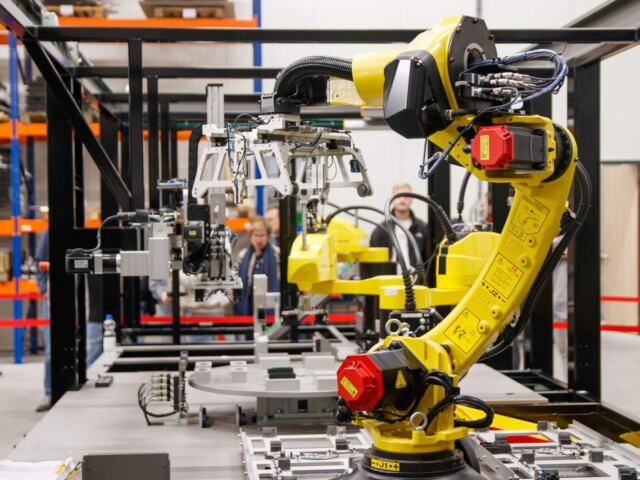
- Machines and sensors: equipment that reports its own state, such as temperature, vibration, cycle count and downtime.
- Software that organises the work: systems for scheduling, quality, maintenance, inventory and finance.
- People and process: new routines, skills and decision rights so the data actually changes what gets done.
Technology is the visible part. The harder part is usually the third layer, because a dashboard nobody trusts changes nothing.
Who benefits and how
Different roles feel the change in different ways. Knowing who gains what helps you win support early.
- Operators get clearer instructions, fewer manual entries and faster answers when a machine stops.
- Maintenance teams move from reacting to breakdowns to planning work around real condition and history.
- Quality staff can use structured data to investigate defects by batch, machine or setting.
- Planners and buyers see real capacity and stock, so promises to customers become more reliable.
- Finance and leaders get trustworthy cost and performance figures without waiting for month-end reports.
The benefit is rarely one dramatic gain. It is many small improvements in speed, accuracy and visibility that add up across the plant.
How it relates to the wider vision and the smart factory
You will often see these terms used interchangeably. They overlap, but they are not the same thing. If you want the background on the wider idea, read what is industry 4.0, which covers the concept and its building blocks.
A simple way to separate them:
- Digital transformation is the change programme: what you decide, build and adopt.
- The broader industrial vision is the idea of connected, data-driven production.
- A smart factory is what a site looks like when much of that vision is working day to day.
To see how real plants have put the pieces together, browse these smart factory examples. Treat them as illustrations of sequence and trade-offs, not as a template to copy.
The technology building blocks
Most projects draw on the same set of tools. Knowing what each does, and where it sits, stops you buying overlapping systems.
Connected equipment and plant data
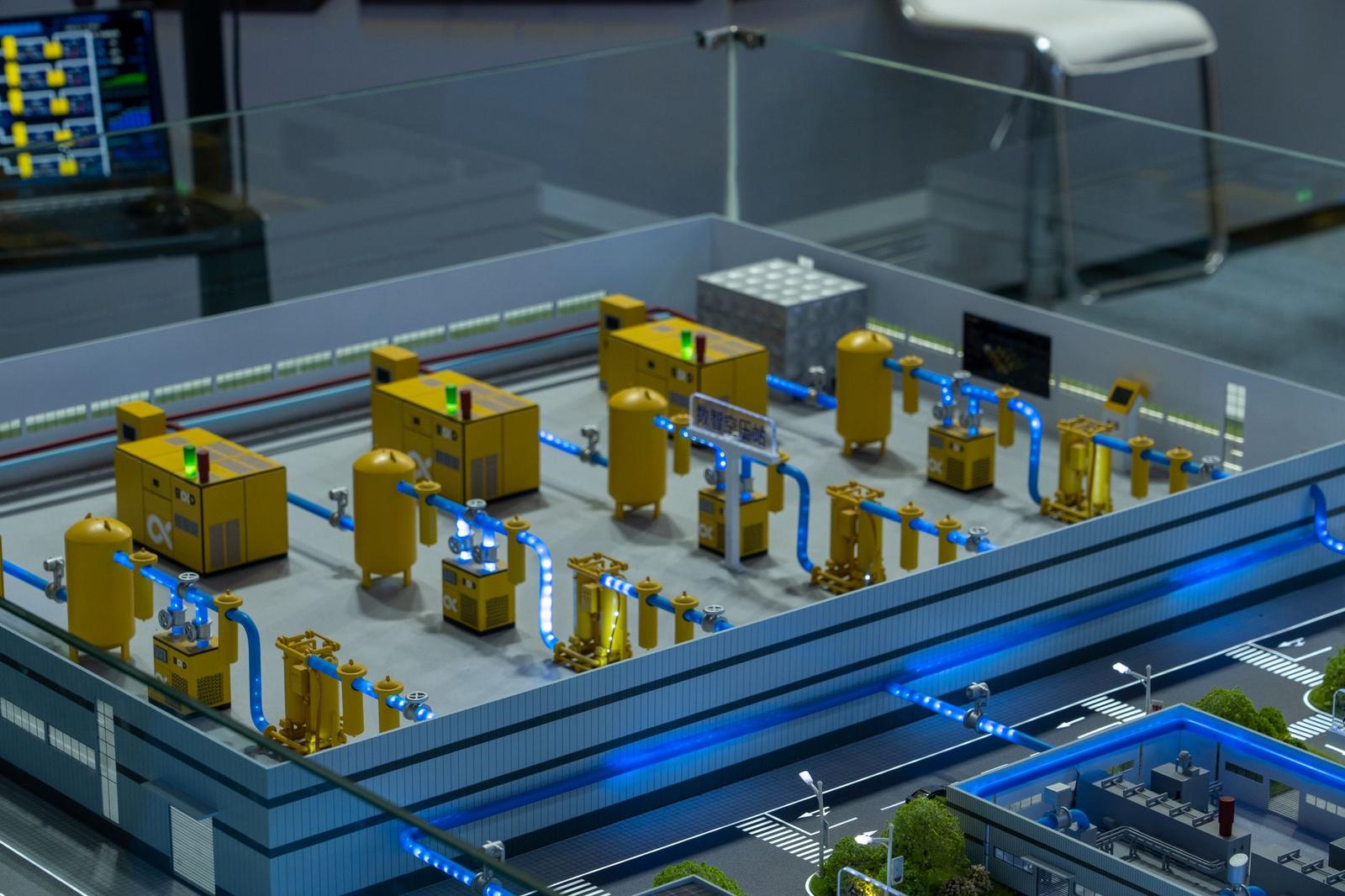
Sensors, controllers and gateways collect data from machines. If you are new to this layer, what is industrial iot explains how connected devices feed analytics on the shop floor.
Supervisory control is the other long-standing source of plant data. What is a scada system covers how those systems monitor and control processes across a site or many sites.
Shop-floor and business systems
Between the machines and the finance team sits the system that runs production orders, tracking and quality records. Our guide on what is a manufacturing execution system explains that middle layer.
Above it sits the business backbone. If you are weighing options, erp for manufacturing companies sets out what to look for in planning, purchasing, inventory and finance.
Maintenance and asset care
Maintenance is often the quickest place to see a return, because downtime is easy to count. A good starting point is what is a cmms, which describes software for work orders, schedules and asset history.
Simulation and modelling
Virtual models let you test changes before touching the line. For the details, see what is a digital twin in manufacturing. These tools tend to pay off later, once your basic data is reliable.
Analytics and artificial intelligence
Once data is flowing, analytics can spot patterns people miss: a bearing that drifts before it fails, or a process setting that quietly raises scrap. Machine-learning tools can help, but they depend on clean, labelled history.
Start with simple analysis. Trend charts, alarms and weekly reviews of downtime reasons deliver value long before predictive models do. Add advanced methods when a clear question justifies them.
Why many programmes stall
Plenty of manufacturers run a promising pilot and then never scale it. Consultants have a name for this: pilot purgatory. It happens when a trial works on one line but nobody owns the job of rolling it out.
The same few causes come up again and again:
- No business owner. The pilot belongs to an IT or innovation team, not to the plant manager who must live with the result.
- No clear problem. The project starts from a technology, so there is no number to prove it worked.
- Poor data foundations. Machine names, part numbers and units differ between sites, so results cannot be compared.
- Too much analysis up front. Teams map every site in detail and run out of energy before anything ships.
- Training left to the end. Operators and technicians are shown the tool after it is built, so they work around it.
The fix is rarely more technology. It is usually a smaller first scope, a named owner and a measure agreed before work begins.
The people side of stalled projects
Skills are part of this too. Many plants find that the gap is not in specialist data science but in everyday data literacy: reading a trend chart, questioning an odd number and keeping records tidy. The government definition of digital manufacturing itself stresses integrating and using data from design, production and product use, so training that builds these everyday data skills fits the goal.
Resistance is rarely about technology itself. People worry that new tools will expose mistakes, add paperwork or replace their judgement. Those worries are reasonable, and ignoring them slows adoption.
Three habits help. Explain the problem the tool solves in the operators’ own terms. Let experienced staff shape how it is set up. And remove an old task for every new one you add, so the tool feels like relief rather than extra work.
Leaders also set the tone. When managers ask for the new dashboard in daily meetings and stop accepting the old report, the change sticks. When they keep both, people keep the old one.
Signs a pilot is ready to scale
- The result beat the baseline, and the people on the line agree it did.
- The setup can be repeated by someone who was not on the pilot team.
- The data definitions work at a second site without rework.
- Support and training are written down, with named people responsible.
- The cost of rollout is known and fits an approved budget.
If several of these are missing, extend the pilot or fix the gap. Scaling an unready pilot spreads its problems across the company.
A practical sequence for getting started
You do not need a multi-year master plan to begin. You do need an order of work. This sequence suits most plants, large or small:
- Pick a painful, measurable problem. Examples are unplanned downtime on one bottleneck machine, scrap on one product, or late orders for one customer.
- Record the baseline. Measure the problem for a few weeks as it stands so you can show change later.
- Fix the data first. Agree names, units and who enters what. Replace manual entry where it causes errors.
- Run a contained pilot. Choose one line or cell, with a named owner on the plant floor.
- Decide how it scales before it ends. Write down who rolls it out, what it costs and what result earns the next step.
- Repeat in the next area. Reuse what worked and keep the same data standards.
Each pass builds skills and trust. Early wins also make the next budget conversation easier.
Getting the data foundations right
Data foundations matter. If the same machine is called three different things in three systems, no analytics tool can tell you how it performs.
Before you buy anything, agree a short data dictionary. It does not need to be elaborate. A shared spreadsheet that every site follows is better than an unused enterprise standard.
- Naming: one name and code for every machine, line, product and reason for downtime.
- Units and time: the same units, time zones and shift definitions everywhere.
- Ownership: a named person who answers for each data set and fixes errors.
- Capture: automatic collection wherever manual entry is slow, late or inconsistent.
- Access: the people who act on the data can see it without asking for a report.
Operators will stop entering data if they never see it used. Show the results back on the floor, in plain charts, soon after the data is captured.
Build, buy or bring in help
Every project raises the question of who does the work. The answer depends on your skills, your timeline and how unique the problem is.
- Buy standard software when the need is common, such as maintenance scheduling or inventory control. You get proven features and ongoing updates.
- Build or customise when the process is truly your competitive edge and no product fits. Expect to maintain it for years.
- Bring in outside help for specialist gaps, such as network design, integration or security assessment. Agree in writing what knowledge stays with your team afterwards.
Whatever you choose, keep ownership of your data and make sure you can export it. Lock-in is a common regret, and it is cheaper to avoid than to unwind.
Questions to ask any supplier
- Which of our existing machines and systems does it connect to, and how?
- Who owns the data, and can we export it in an open format?
- What does support cover, and what does it cost after the first year?
- How are security updates delivered for plant-floor equipment?
- Can we speak to a customer with a plant similar to ours?
Vague answers to these questions are themselves useful information. Ask for a trial on your own data before committing.
Budgeting and timing
Software licences are only part of the cost. Plan for integration work, sensors and network upgrades, training time, and the productivity dip while people learn a new routine.
Stage the spending against proven results. A small first phase that pays for itself in a measurable way is far easier to defend than a large upfront commitment. If a phase misses its target, you can stop with limited loss.
Security, people and the wider business
Connecting machines to networks widens your exposure. Plant equipment was often designed for isolated use, and updates can be slow. Read industrial cybersecurity basics before you connect critical equipment, not after.
A few basic controls go a long way. Keep an inventory of what is connected, separate plant networks from office networks, limit who can change controller settings, and have a tested plan for restoring systems after an incident. Do not let a vendor’s remote access stay open without review.
People matter just as much. Operators know why a machine misbehaves, so involve them in choosing what to measure. Plan for training time, and for the supervisors who will have to change how they run shifts.
Digital work also touches how the whole company is run: budgets, KPIs, supplier relationships and governance. For that angle, see our overview of industrial business management. And if you are deciding what to do in-house and what to buy in, our category on industrial services describes the kinds of outside support that exist.
Help available to smaller manufacturers
If you run a small plant, you are in the majority. An MxD announcement quoted its CEO saying that small and mid-sized manufacturers make up over 98% of the market, and over 75% have fewer than 20 employees. The same announcement describes a five-year collaboration with the NIST Manufacturing Extension Partnership to deliver tailored support for digital adoption, including cybersecurity preparedness.
In a separate step, NIST reported in November 2024 that the Clean Energy Smart Manufacturing Innovation Institute and NIST MEP had signed a memorandum of understanding. Under it, CESMII will provide tools like its Smart Manufacturing Interoperability Platform and starter kits.
These programmes are US-based and their terms may change, so check the current offer with the organisations directly. If you are outside the US, look for your own national manufacturing extension or productivity body. This site is independent and is not connected to any of the organisations named here.
Measuring whether it worked
Choose a small set of measures and keep them stable. Too many indicators hide the signal.
- Availability and downtime: how much planned production time the equipment actually ran.
- Quality: scrap, rework and first-pass yield for the product you targeted.
- Delivery: on-time-in-full performance and lead time.
- Maintenance: share of work that is planned rather than reactive.
- Adoption: whether people actually use the new tool or fall back to the old method.
Report against the baseline you took before the project. If a number did not move, say so and adjust. A programme that admits a miss early costs far less than one that hides it.
Frequently asked questions
What is digital transformation in manufacturing in simple terms?
Show answer
It is the use of connected machines, software and data to make production, quality, maintenance and planning work better. It also involves changing how people work, not just buying tools.
Where should a small manufacturer begin?
Show answer
Pick one costly, measurable problem, record the baseline, fix the data behind it and run a contained pilot. Public programmes such as the MEP network in the US exist to support smaller firms, though terms can change.
Do I need an ERP, an MES and a CMMS all at once?
Show answer
No. Start with the system that addresses your biggest problem. Maintenance software is often the lightest first step, while an ERP or MES decision depends on how complex your production and reporting needs are.
Why do pilots fail to scale?
Show answer
Usually because no business owner is accountable, the problem was never measured, or data is inconsistent between sites. Deciding how a pilot will scale before it starts reduces that risk.
Does connecting equipment create security risk?
Show answer
Yes, it can widen exposure, particularly for older equipment that was never designed for networks. Plan segmentation, access control and update routines before you connect critical machines.