Wondering what a smart factory looks like beyond the buzzwords? These smart factory examples show you real plants using sensors, digital twins and AI, with measured gains in output, energy and speed.
This guide sits within our wider coverage of digital transformation in manufacturing.
| Example | Reported result |
|---|---|
| Siemens Amberg, Germany: named to the WEF Global Lighthouse Network | March 2021 |
| Siemens Erlangen: productivity gain over four years | 69 percent |
| Siemens Erlangen: energy consumption cut over four years | 42 percent |
| Siemens Erlangen: space requirements reduced | 50 percent |
These figures come from Siemens’ Amberg press release and tEDmag’s Erlangen report. They are company-reported and can change, so check the sources before you rely on them.
What makes a factory “smart”?
The US National Institute of Standards and Technology describes smart manufacturing systems as “fully-integrated, collaborative manufacturing systems that respond in real time to meet changing demands and conditions in the factory, in the supply network, and in customer needs.” The definition appears on a NIST program page.
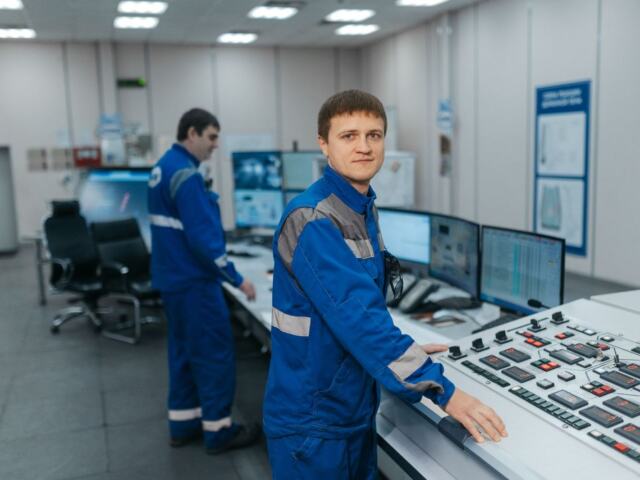
In practice, that means a plant that collects data from its machines, analyses it, and acts on it quickly. University researchers describe one aspect of it as capturing, gathering and analysing data to make plant management decisions based on facts, as laid out in an explainer from the University of Illinois.
If you want the wider background, our piece on what is industry 4.0 covers the concept behind these plants.
Siemens Amberg: a pioneer plant
The World Economic Forum added the Siemens Electronics Works Amberg to its Global Lighthouse Network in March 2021, according to Siemens’ own press release. The release says AI-supported process controls and predictive-maintenance algorithms were used.
The release is in German, and the outcome it describes is Siemens’ own account.
Siemens Erlangen: productivity and energy together
Siemens’ Erlangen plant was the third Siemens site recognised by the Forum, after Amberg and Chengdu in China.
According to tEDmag, the plant increased productivity by 69 percent and cut energy consumption by 42 percent in four years.
The same report says an end-to-end data analytics platform helped cut space requirements by 50 percent and material consumption by 40 percent. Treat these as one company’s account of one plant, not a benchmark.
Siemens also said it would invest €500 million in research and infrastructure in Erlangen, positioning the site as a research and development hub for the industrial metaverse. That shows these results sat inside a large, long-running investment programme, not a quick fix.
Erlangen also aims to become a leading supplier of power electronics for the energy transition. A smart factory, in other words, is usually tied to a business goal, not adopted for its own sake.
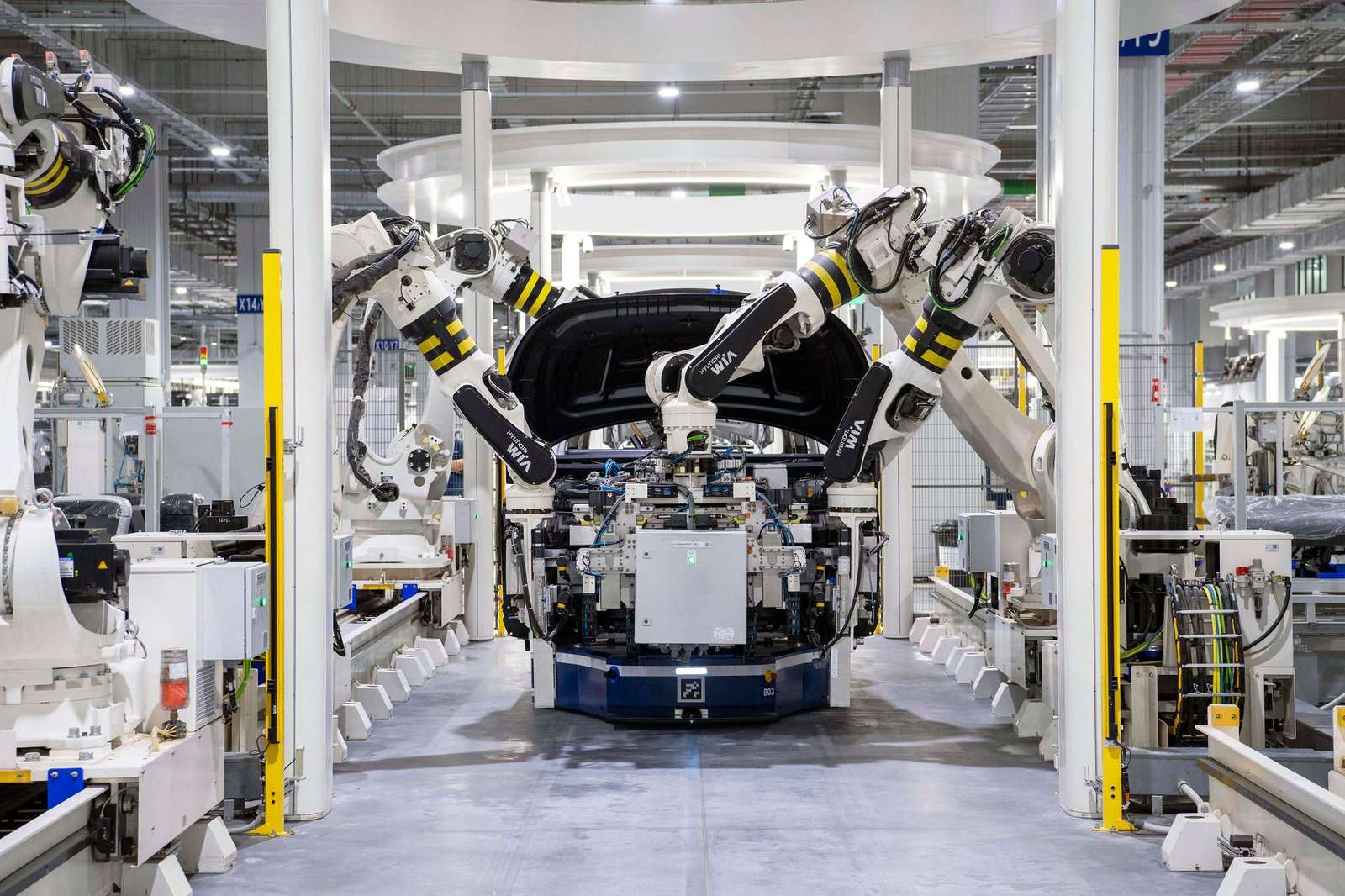
Siemens Nanjing: a factory designed in the virtual world
Nanjing is the fifth Siemens site named a Lighthouse Factory, following Amberg, Erlangen and Fürth in Germany, and Chengdu in China, per Industrial Automation India.
Siemens implemented a digital excellence strategy, deploying end-to-end digital twins, modular automation, manufacturing operations management systems and more than 50 AI applications.
- Digital twin: a virtual model of an asset, process or system built from sensor data.
- Modular automation: production cells that can be reconfigured as products change.
- AI applications: software tools used across the operation, more than 50 in this case.
Siemens reports a 33 percent reduction in time-to-market, as the same report notes. The report describes it as a “Digital Native Factory” recognised for continuous digital transformation and AI-driven adaptive manufacturing.
Beyond one vendor: energy savings elsewhere
Siemens sites are heavily documented, but the Lighthouse programme covers other industries too. A Forum sustainability report, covered by Hellenic Shipping News, gives a consumer healthcare company as an example.
That company coupled advanced controls with green technology in a sensor-fed automated system. The result was 25 percent less energy consumed and an 18 percent reduction in CO2.
Note the pattern across all these examples:
- Start with a clear target, such as output, energy or lead time.
- Collect machine data with sensors.
- Use analytics or digital twins to decide what to change.
- Automate the repeatable decisions and measure the effect.
How these plants differ from a conventional factory
A conventional plant often runs on fixed schedules, manual inspection and reports that arrive after the shift ends. The examples above shift three habits at once.
- Decisions move closer to real time. Data from machines feeds dashboards and models, so problems show up while they can still be fixed.
- Digital twins support the work. Nanjing deployed end-to-end digital twins alongside modular automation.
- Maintenance becomes predictive. Amberg used predictive-maintenance algorithms rather than waiting for failures.
- Energy is treated as a production metric. Erlangen and the healthcare example both report energy cuts, and Erlangen also reports a productivity gain.
None of this requires a new building. Many of these steps, such as adding sensors to existing lines, can start with a single pilot cell.
The NIST description also stresses the supply network, not only the factory floor. A plant that reacts quickly internally but cannot see its suppliers captures only part of the idea.
Skills matter as much as software. The Nanjing recognition highlighted worker enablement alongside asset utilisation and resource management, which suggests the people side is part of the result.
What to check before copying these examples
Most of the numbers above come from the companies themselves, not from independent audits. Baselines, time periods and product mixes differ, so a 69 percent gain at one plant will not transfer directly to yours.
Connected plants also widen the attack surface. Our overview of industrial cybersecurity basics explains why connecting machines should go hand in hand with security planning.
This site is independent and not affiliated with Siemens, the World Economic Forum or NIST, and it does not offer consulting.
Frequently asked questions
What is a simple smart factory example?
Show answer
A plant that fits sensors to its machines, analyses the data, and uses it to schedule maintenance before breakdowns. Siemens Amberg reports using predictive-maintenance algorithms in this way.
Do smart factories need AI?
Show answer
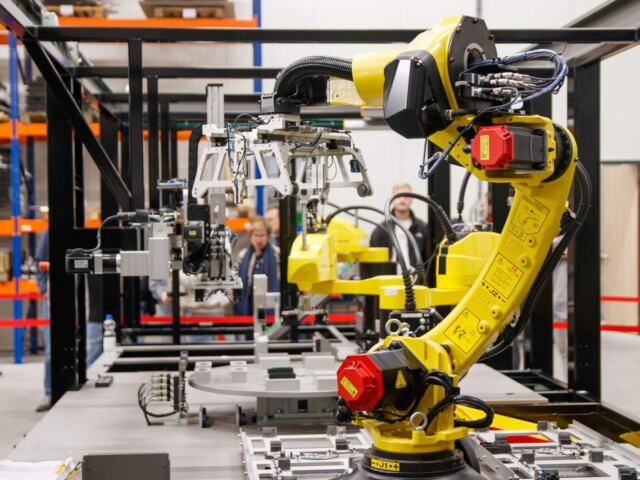
Not always. NIST’s definition centres on integrated systems that respond in real time. AI is one tool; the recent Siemens examples use it alongside digital twins and robotics.
Are these results guaranteed for other plants?
Show answer
No. They are company-reported results from selected sites, with different baselines and products. Use them as direction, not as a forecast.
What is a digital twin?
Show answer
A virtual model of an asset, process or system, built from data from sensors in that asset or system.