If you are trying to work out what industrial cleaning services actually cover, you are not alone. They range from routine floor care to blasting tanks and vessels, and the right method depends on the residue and the space.
This guide sits within our wider look at industrial services and explains scope, methods and safety.
| Item | Key fact |
|---|---|
| Confined space, test 1 | Large enough that an employee can bodily enter and perform assigned work |
| Confined space, test 2 | Limited or restricted means for entry or exit |
| Confined space, test 3 | Not designed for continuous employee occupancy |
| Dry ice blasting hazard | Dry ice is listed as a respiratory hazard when used as blast media |
| Blasters in enclosed spaces | Protected by hoods and airline respirators (shipyard rule) |
The figures come from OSHA’s permit-required confined spaces standard and its shipyard surface preparation page. Rules change and differ by sector, so check the source before you rely on them.
What industrial cleaning covers
Industrial cleaning means cleaning done in plants, warehouses, refineries, food factories and similar sites, where the dirt is more than dust. Think oil, grease, process residue, scale, combustible dust or product build-up inside equipment.
The work usually falls into a few groups:
- Facility cleaning: floors, walls, ceilings, racking and high-level dust removal.
- Equipment cleaning: conveyors, ovens, heat exchangers, hoppers and production lines.
- Vessel and tank cleaning: removing sludge or residue from enclosed equipment.
- Process and turnaround cleaning: planned shutdown work before inspection or maintenance.
- Waste and spill cleanup: removal of residues and contaminated material.
Providers vary widely in what they offer, so scope should be written down before any job starts.
Common industrial cleaning methods
No single method suits every surface. The choice turns on what you are removing, what lies underneath, and whether the equipment can get wet or take abrasion.
High-pressure water
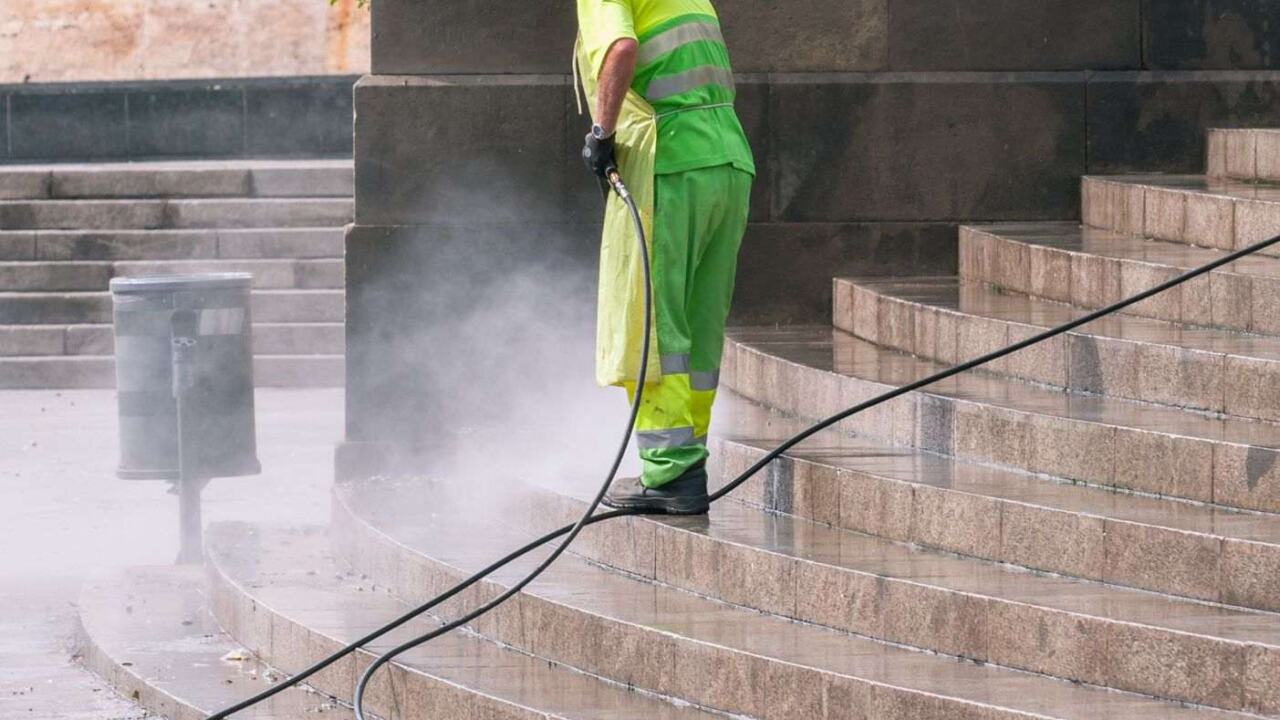
Water jetting uses pressurised water to strip scale, product build-up and coatings. It suits heat exchangers, pipework and tanks, but it is not gentle on delicate parts or electrical gear.
Dry ice blasting
Dry ice blasting fires solid carbon dioxide pellets at a surface. The pellets turn to gas, so there is no wet or abrasive media left to collect. It is often used on production equipment that must go back into service quickly.
Abrasive blasting
Abrasive blasting propels grit or other media to remove rust, paint and heavy coatings. It creates dust, and the media and the coating being removed both matter for health controls.
Vacuum and dry cleaning
Industrial vacuums with suitable filtration lift fine dust, powders and dry residue. In combustible-dust settings, equipment choice is a safety matter, not a convenience.
Chemical and steam cleaning
Detergents, solvents and steam break down grease, oil and organic films. The chemical must suit the surface and the waste must be handled properly afterwards.
Choosing a method for the job
Start with the residue, then the substrate, then the site limits. A food plant, a chemical works and a metal fabricator will each reach different answers.
- Identify what is being removed and whether it is hazardous, flammable or toxic.
- Check what the surface can tolerate: water, heat, abrasion or chemicals.
- Decide how waste, wastewater and used media will be captured and disposed of.
- Consider downtime: some methods leave equipment dry and ready sooner.
- Confirm access, including whether any space counts as confined.
Cleaning is also a quality and hygiene issue. Where you outsource production, the cleaning standard may be part of the arrangement; see what is contract manufacturing for how those responsibilities are often split.
Safety: confined spaces, dust and pressure
Many of the dirtiest jobs happen inside tanks, vessels and hoppers. OSHA defines a confined space by three tests: a person can bodily enter and work in it, it has limited or restricted means for entry or exit, and it is not designed for continuous occupancy. OSHA gives tanks, vessels, silos, storage bins, hoppers, vaults and pits as examples.
For permit spaces, the standard’s text sets out roles such as an attendant stationed outside, an entry supervisor and written entry permits.
Method choice affects the hazard. OSHA’s shipyard guidance notes that blasting dust may present significant health hazards in confined or enclosed spaces, and it lists dry ice used as blast media, heavy metal dust including lead and beryllium among the hazards. It adds that airline respirators may be necessary if ventilation is not adequate. For shipyard abrasive blasting in enclosed and confined spaces, it calls for hoods and airline respirators. Shipyard rules are a separate regime from general industry, so use them as an illustration, not as your own site’s rule.
The same OSHA page also lists high-pressure hazards among the exposures in surface preparation work. Treat high-pressure hoses and lances with the same respect as any other energised equipment.
Planning a cleaning shutdown
Large cleaning jobs are usually timed with a maintenance shutdown, because equipment must be empty, isolated and cool before anyone touches it. The same OSHA page lists heavy metal dust including lead, arsenic, cadmium, chrome and beryllium as a hazard, which is worth knowing before any blasting is scheduled.
A sensible plan covers these points:
- Isolation: power, feed lines and moving parts locked off and verified.
- Access: scaffolding, lighting and safe routes in and out of the work area.
- Utilities: water, compressed air and extraction available where the method needs them.
- Waste route: where sludge, wash water and spent media go, and who signs for them.
- Restart checks: inspection after cleaning so nothing is left inside equipment.
Paperwork matters too. OSHA describes an entry permit as the written or printed document the employer provides to allow and control entry into a permit space.
Contractors, audits and records
Hiring a cleaning contractor does not hand off the site’s duties. Share known hazards, agree isolation and lock-out arrangements, and ask how the crew handles waste and entry.
Useful records to expect include:
- A written scope and method statement for the task.
- Risk assessments and any entry permits.
- Waste disposal documentation.
- A sign-off confirming the equipment is clean and ready.
A broader industrial safety audit checklist can help you check that cleaning work fits into the site’s wider controls. This site is independent and educational; it does not provide cleaning services or take enquiries.
Frequently asked questions
What do industrial cleaning services include?
Show answer
They typically cover facility cleaning, equipment and vessel cleaning, shutdown cleaning and waste cleanup. Exact scope varies by provider and site, so confirm it in writing.
Is dry ice blasting safe indoors?
Show answer
It can be done safely with planning, but OSHA’s shipyard page lists dry ice used as blast media as a respiratory hazard in confined or enclosed spaces. Ventilation and atmosphere checks matter.
What counts as a confined space?
Show answer
OSHA’s definition requires that a person can enter and work, that entry or exit is limited, and that the space is not designed for continuous occupancy.
How do I pick between water, dry ice and abrasive cleaning?
Show answer
Match the method to the residue and the surface, then weigh waste handling, downtime and safety controls for the space.