Parts arrive late, stock sits on shelves, and you are not sure which problem to fix first. Industrial supply chain management means planning and controlling the flow of materials, information and money, from raw material to customer.
This guide sits within our wider coverage of industrial business management.
| Item | Value |
|---|---|
| What supply chain management covers | Planning, coordinating and controlling the flow of materials, information and financial resources |
| Inventory turnover formula | Cost of goods sold divided by average inventory |
| Average days to sell inventory | 365 days divided by the inventory turnover ratio |
| What a low turnover rate may signal | Overstocking, obsolescence, or deficiencies in the product line or marketing effort |
| What a high turnover rate may signal | Inadequate inventory levels, which may lead to lost business |
Definitions and formulas come from the IEEE Technology Navigator and Wikipedia’s inventory turnover entry. Wording and methods can change, so check the sources before you rely on them.
What an industrial supply chain actually is
An industrial supply chain is the network of suppliers, plants, warehouses and carriers that turns raw material into a finished product. IEEE’s technology navigator describes supply chain management as a discipline concerned with planning, coordinating, and controlling the flow of materials, information, and financial resources from raw material sources through manufacturing and distribution to the end customer.
For a business owner, that definition breaks into three flows you can see in your own operation:
- Materials: raw stock, components, tooling and finished goods moving in, through and out of your site.
- Information: forecasts, purchase orders, schedules and delivery notices that tell each party what to do next.
- Money: payments to suppliers, terms with customers and the cash tied up in stock.
Problems usually appear where one flow gets out of step with another. A late purchase order, for example, delays material, which delays production, which delays an invoice.
The main stages to manage
Every industrial chain looks different, but most owners deal with the same handful of stages. Naming them helps you decide where your attention is best spent.
- Planning: forecasting demand and deciding what to buy and make.
- Sourcing: choosing suppliers and agreeing prices, lead times and quality terms.
- Making: scheduling production and keeping equipment available.
- Delivering: storing, packing, shipping and invoicing.
- Returning: handling defects, warranty claims and scrap.
Planning is the stage that drives all the others. A weak forecast leads to rush orders, idle machines or surplus stock, and each of those costs money.
Production reliability feeds the chain too. If your machines stop unexpectedly, downstream deliveries slip, so it helps to understand how to calculate overall equipment effectiveness as one view of plant performance.
Why inventory sits at the centre
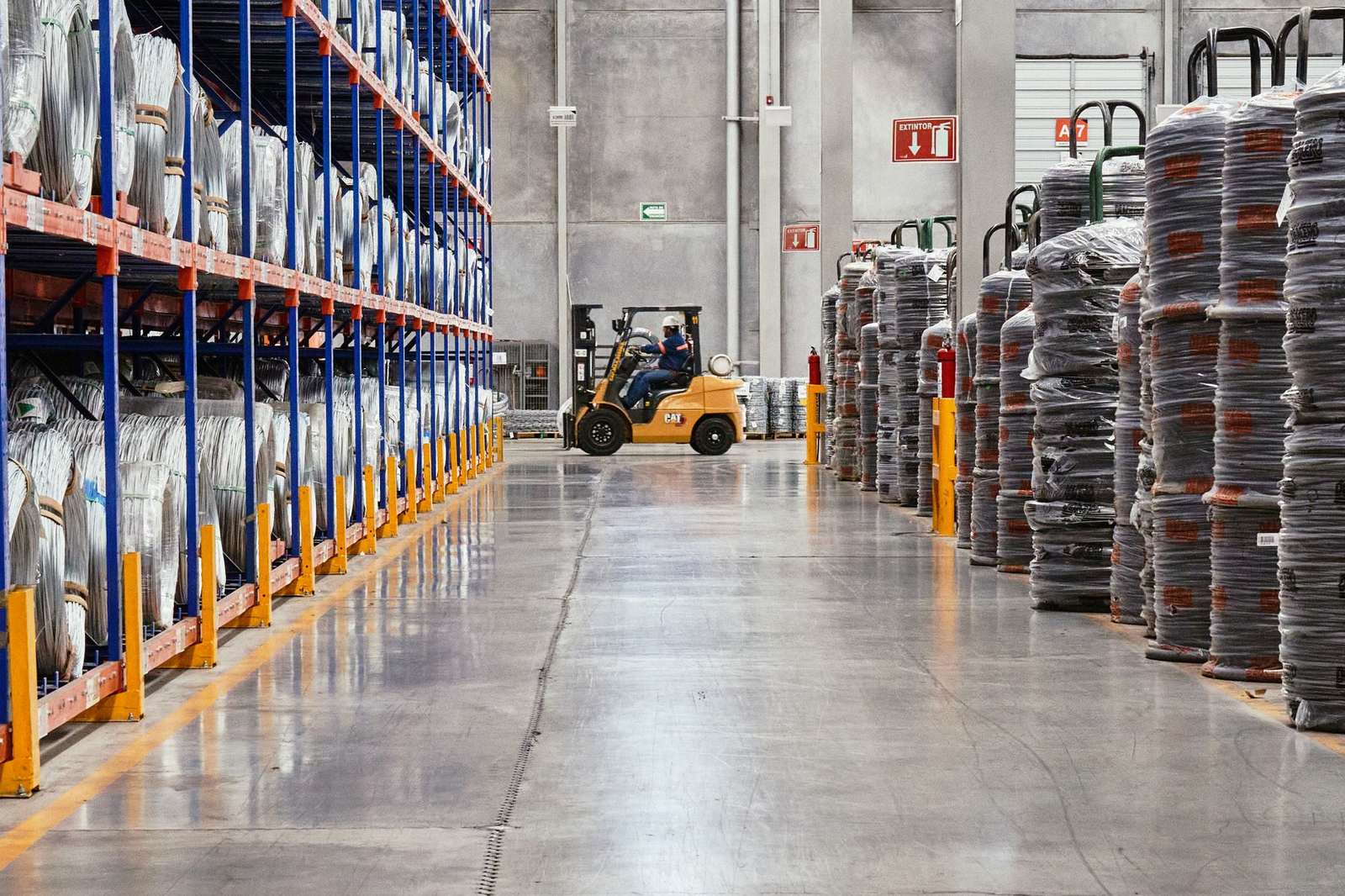
Inventory is where supply chain decisions turn into cash. Too much ties up money and space, while too little stops production or loses sales.
The standard check is inventory turnover. Wikipedia states that the equation for inventory turnover equals the cost of goods sold divided by the average inventory. Average inventory is commonly the beginning balance plus the ending balance, divided by two.
To turn that into days, divide 365 by the turnover ratio. Wikipedia gives the average days to sell the inventory as 365 days divided by the inventory turnover ratio.
How to read the result
Neither a high nor a low figure is good or bad by itself. According to Wikipedia, a low turnover rate may point to overstocking, obsolescence, or deficiencies in the product line or marketing effort.
The same page notes that a high turnover rate may indicate inadequate inventory levels, which may lead to a loss in business as the inventory is too low. In other words, you are looking for balance, not the biggest number.
Two cautions apply when you compare figures:
- Some compilers of industry data use sales as the numerator instead of cost of sales, so confirm which basis a benchmark uses.
- Normal turnover differs between industries, so compare against similar businesses and against your own past results.
Practical habits for a smaller business
You do not need enterprise software to improve a supply chain. Start with a few repeatable habits and track them over time.
- List your critical parts and note which have a single supplier.
- Record actual lead times from order to receipt, not the quoted ones.
- Review slow-moving stock regularly and decide whether to sell, return or write it off.
- Share forecasts with key suppliers so they can plan capacity.
- Pick a small set of measures and review them on a fixed schedule.
Choosing those measures is easier with a shortlist, and our guide to key performance indicators for manufacturing is a place to begin.
IEEE’s navigator also points to the NIST Supply Chain Risk Management Practices framework, which addresses the cybersecurity dimension of information sharing across supply chain partners. Because digital links between partners can create exposure as well as efficiency, it is worth asking suppliers how they protect shared data.
Common weak points to look for
Most supply chain trouble comes from a short list of causes. Checking each one against your own operation is a quick way to find where to start.
- Single-source parts: one supplier failing can stop a whole line, so know which components have no alternative.
- Unreliable lead times: if deliveries vary, you either hold extra stock or risk running out.
- Poor forecasts: sales, purchasing and production working from different numbers creates surplus and shortages at the same time.
- Weak records: if stock counts in the system do not match the shelf, every plan built on them is off.
- Slow communication: a supplier delay that reaches you late leaves little time to react.
None of these needs special technology to address. A shared spreadsheet, a regular supplier call and honest stock counts go a long way.
When you find a weak point, fix one thing at a time and measure the effect. Changing several things at once makes it hard to know what helped.
Why coordination matters more than size
IEEE notes that the transition to globally distributed manufacturing in the 1990s accelerated the need for formal supply chain frameworks. Long chains have more places where a delay can start.
The same source says collaborative planning has been studied as a way to synchronize capacity decisions across organizational boundaries. For a small manufacturer, the plain version is simple: tell suppliers and customers what you expect, and ask them to do the same.
This site is independent and educational. It is not affiliated with any company, agency or standards body mentioned, and it does not offer consulting or take enquiries.
Frequently asked questions
What is industrial supply chain management in simple terms?
Show answer
It is the planning, coordinating and controlling of materials, information and money from raw material sources through manufacturing and distribution to the end customer, as IEEE’s technology navigator describes it.
How do I calculate inventory turnover?
Show answer
Divide cost of goods sold by average inventory. Divide 365 by the result to estimate the average days to sell your stock.
Is a high inventory turnover always good?
Show answer
No. A high rate may indicate inadequate inventory levels, which may lead to a loss in business, while a low rate may point to overstocking or obsolescence.
Does supply chain management include cybersecurity?
Show answer
It can, because data shared between partners is part of the chain. Ask suppliers how they protect order and forecast information.