Machines stopping without warning is stressful and expensive. If you’re wondering how to reduce downtime in manufacturing, start by measuring every stop, fixing the repeat causes, and shifting from reactive repairs to planned maintenance.
This guide is part of our wider coverage of industrial business management.
| Item | Value |
|---|---|
| Average cost of unplanned downtime, all sectors | $260,000 per hour |
| Annual downtime losses, Fortune Global 500 | $1.4 trillion, 11% of revenues |
| Share of unplanned downtime incidents caused by equipment failure | 42% |
| Share of unplanned stops caused by human error | Roughly 23% |
| Emergency parts price premium | 30% to 40% |
| Average large plant, unplanned downtime | 27 hours per month |
Figures come from ReliaMag and AEMT’s summary of the Siemens report. They are survey-based averages and can change, so check the source before you rely on them.
Why unplanned downtime costs more than it looks
Most teams count lost output and repair bills. According to ReliaMag, the hidden costs often exceed those visible ones by two to three times.
Hidden costs include idle labor, overtime to catch up, startup scrap and expedited shipping. Emergency parts add more: ReliaMag reports that parts ordered on an emergency basis cost 30% to 40% more than planned purchases.
The size of the loss varies widely. Per the same article, a small job shop might lose around $5,000 per hour, while the average across all sectors is $260,000 per hour.
Find out what is actually stopping your lines
You cannot cut what you do not measure. Begin with a simple downtime log that records every stop.
- Start and end time of the stop
- Machine, line and shift
- Cause category: equipment, material, changeover, operator, utilities
- What was done to restart
After a few weeks, rank stops by total lost minutes, not by how dramatic they felt. A handful of machines or causes usually account for most of the loss, and that is where to focus.
ReliaMag cites industry surveys saying equipment failure accounts for 42% of unplanned downtime incidents. It also says human error causes roughly 23% of unplanned stops, including operator mistakes, misconfigured machines and skipped procedures.
Move from reactive to planned maintenance
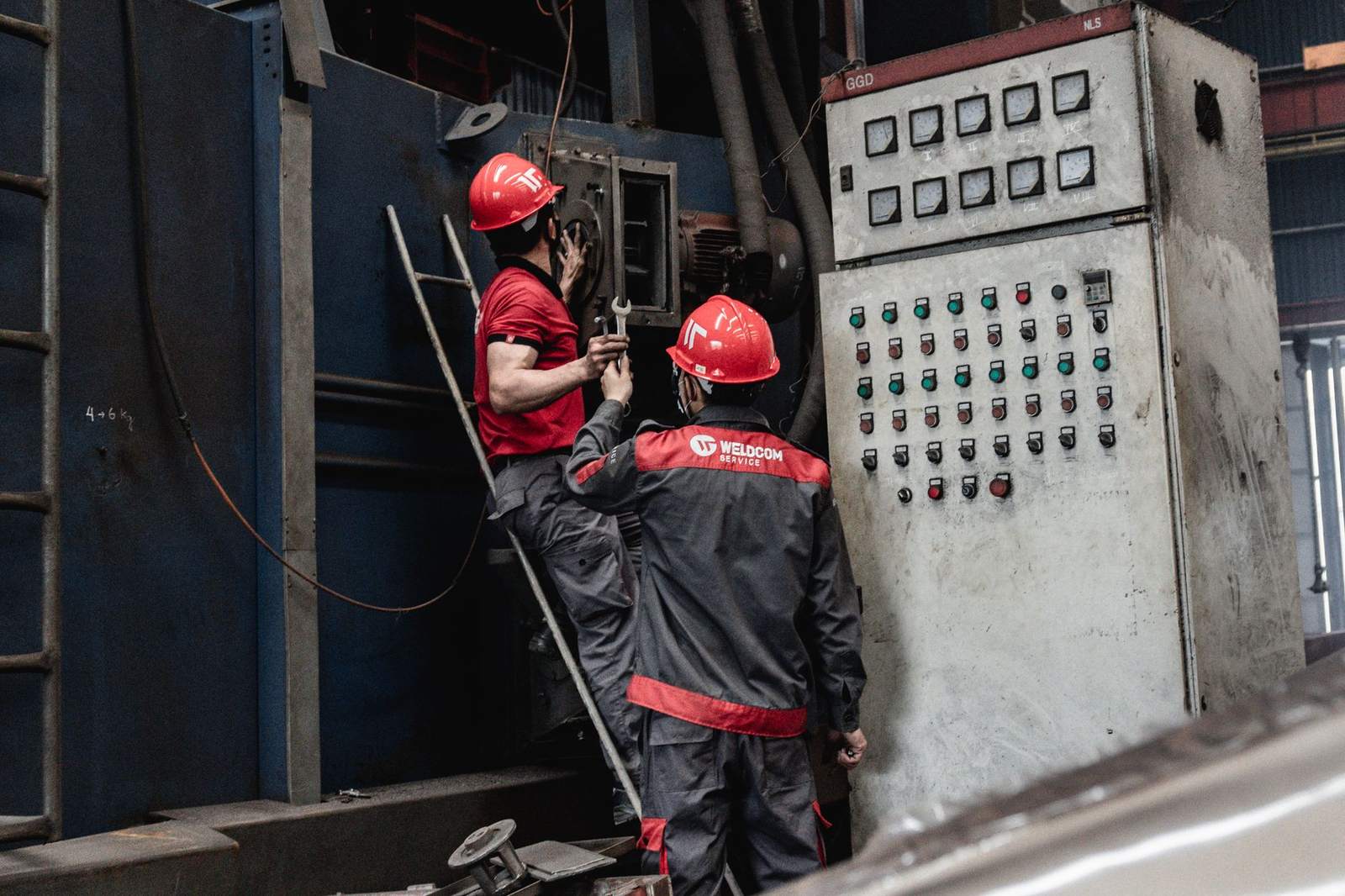
ReliaMag, citing a Plant Engineering 2021 report, says over 60% of unplanned failures stem from aging assets and deferred maintenance. That makes a preventive maintenance schedule one of the most direct levers you have.
- List critical machines, the ones whose stoppage halts the whole line.
- Set inspection, lubrication and replacement tasks from manufacturer guidance and your own failure history.
- Schedule the work in planned windows, and track completion.
- Add condition monitoring, such as vibration or temperature readings, to the most critical assets.
- Review the failure log monthly and adjust tasks.
Condition-based approaches can help further. AEMT’s summary of the Siemens True Cost of Downtime 2024 report says the average large plant loses 27 hours per month to unplanned downtime, down from 39 hours in 2019, and credits predictive maintenance adoption for part of the drop.
Track a few downtime numbers every week
A short list of measures keeps the effort honest. Choose a handful and review them at the same weekly meeting, with the people who run the machines in the room.
- Unplanned downtime hours per line, per week
- Number of stops, to separate frequent small stops from rare long ones
- Average time to repair, from breakdown to running again
- Average time between failures for your critical machines
- Planned maintenance tasks completed on schedule
Treat the trend as more useful than any single week. If repair time is long, look at spares, documentation and skills. If stops are frequent, look at inspection routines and operating conditions.
The Siemens True Cost of Downtime 2024 report, as summarized by ReliaMag, estimated that Fortune Global 500 companies lose a combined $1.4 trillion per year to unplanned equipment downtime. Your own plant’s number will be far smaller, but putting a cost per hour on it makes the case for prevention easier to make to finance.
Fix the human and process causes
Not every stop is a broken part. ReliaMag notes that human error shrinks with better training and standardized procedures.
- Write short, visual standard work for setup and restart.
- Train operators to spot early warning signs and report them.
- Use checklists for changeovers and startups.
- Run a quick root-cause review after every major stop, and record the fix.
Many of these habits overlap with lean manufacturing principles, which treat waiting and rework as waste to be designed out.
Keep spares and suppliers ready
A short failure becomes a long one when the part is missing. Keep critical spares on site, based on how long a replacement would take to arrive and what a stop would cost.
Agree lead times and service terms before you need them. Your industrial procurement process is the place to set that up, because rush orders carry the premium described above.
How to reduce downtime in manufacturing: a staged plan
Large programs stall when they try to fix everything at once. A staged plan keeps the work small enough to finish, and each stage builds on the last.
- Start measuring: begin the downtime log on your most important line and agree on cause categories with operators and maintenance staff.
- Rank and investigate: sort causes by lost time, pick the top few, and run a root-cause review on each. Record the corrective action and an owner.
- Prevent repeats: write preventive tasks for the critical machines involved, and check that spares for their known failure points are on the shelf.
- Compare and extend: compare unplanned downtime hours with your starting point, share the result with the team, then extend the method to the next line.
Keep the first scope narrow. One line with visible improvement earns the trust of operators and managers, and that trust matters more than any software tool you might add later.
Give each stage a clear owner and a review date. Without an owner, corrective actions from root-cause reviews tend to sit on a list, and the same failure returns a few weeks later. Short, visible follow-up is what turns a one-off fix into a lasting habit on the shop floor.
Common mistakes to avoid
- Counting only repair cost and ignoring lost output, idle labor and scrap
- Replacing parts without asking why they failed
- Skipping planned maintenance when production is busy, which tends to create the next breakdown
- Collecting data that nobody reviews
- Treating operators as the cause rather than as the best source of early warnings
Downtime reduction is a routine, not a one-off project. Plants that keep the log, the weekly review and the preventive schedule running tend to see stops become shorter and less frequent over time.
Frequently asked questions
What is the first step to reduce downtime?
Show answer
Record every stop with its cause and duration. Rank causes by lost time, then tackle the biggest first.
Is predictive maintenance always worth it?
Show answer
Not for every asset. It tends to pay off on critical machines where a failure is costly and early warning signs can be measured.
How do I calculate the cost of downtime?
Show answer
Add lost output, idle labor, repair costs, overtime and scrap, then divide by hours stopped. ReliaMag says hidden costs often exceed the visible ones, so include them.
Can small plants benefit too?
Show answer
Yes. A simple log, a preventive schedule for critical machines and standard restart procedures need little investment.