Wondering what your plant should actually do differently? The lean manufacturing principles boil down to five ideas: define value, map the stream, create flow, let customers pull, and keep improving.
| Item | Value |
|---|---|
| Core principles of lean | 5 |
| Year the five principles were articulated in Lean Thinking | 1996 |
| Typical value-adding share of total lead time | Often under 5% |
| Most common pull mechanism | Kanban |
| Is pursuing perfection ever finished? | No: continuous |
These figures come from a KaiNexus lean methodology article. Figures can change, so check the source before you rely on them.
This guide sits within our wider coverage of industrial business management. It is independent and educational, and it is not affiliated with any company or body named.
Where the five principles come from
The framework was popularised by Womack and Jones. Their book Lean Thinking (1996) distilled the approach into five principles and gave it the name “Lean”.
The ideas themselves grew out of the Toyota Production System. The principles are deliberately simple, because they are meant to guide decisions on any shop floor rather than prescribe a toolkit.
The five principles, in order:
- Define value from the customer’s point of view.
- Map the value stream.
- Create flow.
- Establish pull.
- Pursue perfection.
They work as a cycle rather than a checklist. Each pass through the loop exposes new problems, which is the reason the last principle never ends.
First principle: define value
Value is what the customer is willing to pay for, not what the factory finds convenient to make. Anything the customer would not pay for is a candidate for waste, even if it feels necessary internally.
A practical way to start is to ask, for each product family, what the buyer actually needs: a specification, a delivery window, a price, a quality level. Write those down before touching any process.
This step also protects against a common trap. Teams often optimise what they can measure easily, such as machine utilisation, while the customer cares about on-time delivery and defect-free parts.
Second principle: map the value stream
A value stream map traces every step from raw input to delivered product and marks which steps add value. Most teams are surprised by the result.
In most value streams, the ratio of value-adding time to total lead time is often under 5%, according to the KaiNexus article. That means most of the time a product spends in your plant is spent waiting, moving or being stored.
When you map, record for each step:
- Process time and waiting time before it.
- Inventory sitting in front of it.
- Defect or rework rate.
- Who owns the step.
Walk the floor while you map. A map drawn from memory in a meeting room usually hides the queues and workarounds that cause delay.
Third principle: create flow
Once you know which steps add value, arrange them to run in a continuous sequence instead of batches waiting in queues. Breaks in flow show up as piles of inventory, queues forming, or people waiting for the next step.
Typical moves include rearranging equipment into cells, shrinking batch sizes and balancing work between stations. Reliable machines matter too, so see how to reduce downtime in manufacturing for the maintenance side of keeping flow unbroken.
Fourth principle: establish pull
Instead of pushing output based on forecasts or schedules, pull systems respond to actual demand. The aim is to produce only what the customer needs, when they need it.
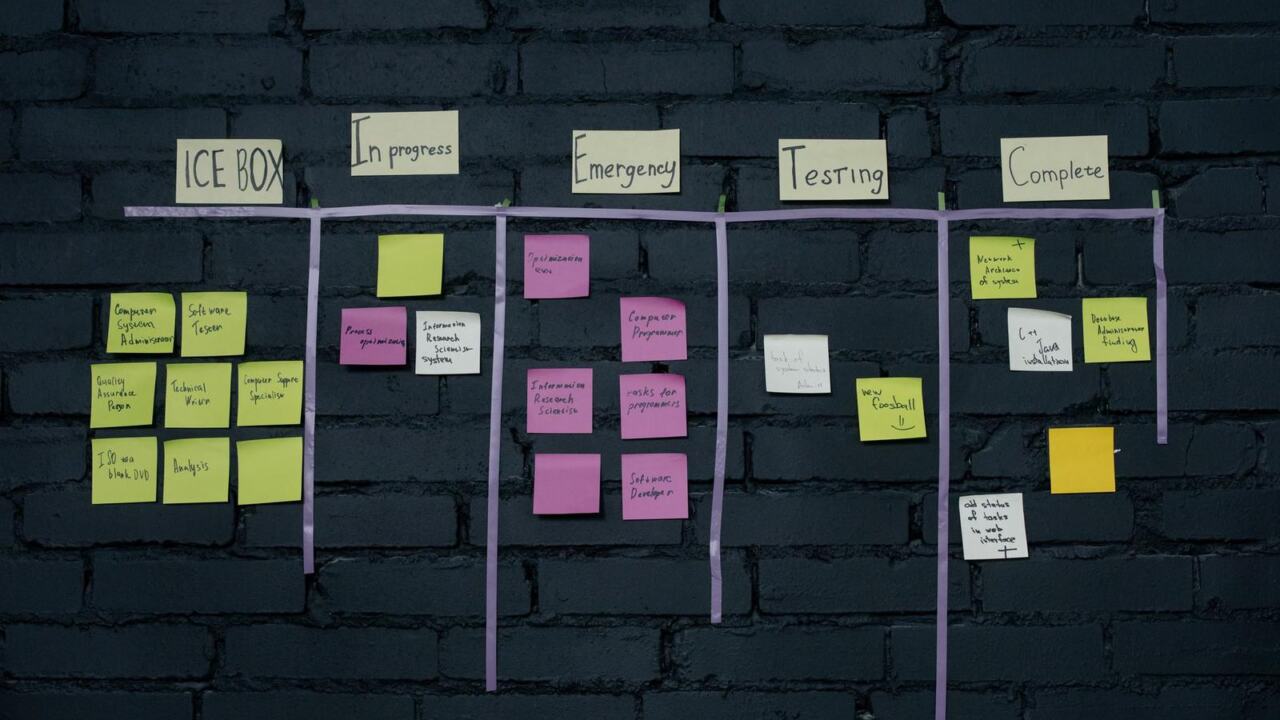
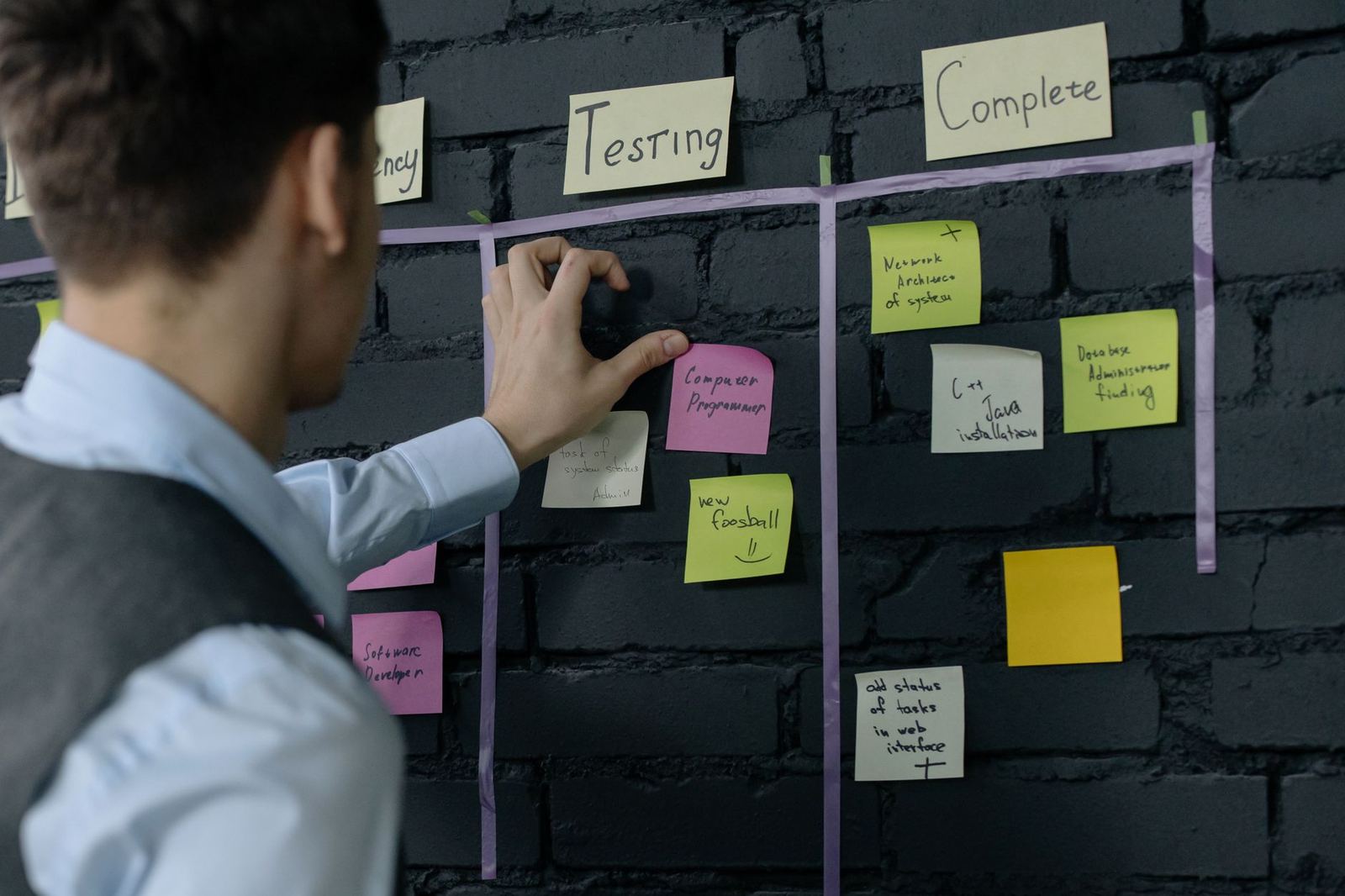
Kanban is the most common pull mechanism: a visual signal that triggers work only when the downstream step is ready to receive it. A card, a bin or an empty floor marking can all serve as the signal.
Pull also limits work in progress. When a downstream station stops asking for parts, upstream stations stop making them, so problems show up quickly instead of hiding in a stockroom.
Fifth principle: pursue perfection
The first four principles are never finished. Pursuing perfection does not mean expecting to reach it; it means accepting that the current state is always improvable.
The KaiNexus article describes a ratchet: standardise, improve, then re-standardise. Standard work captures the current best method for a process, and when someone finds a better way the standard is updated, creating a new baseline.
To know whether changes help, pick measures first; our guide to key performance indicators for manufacturing covers common choices.
The wastes lean looks for
Lean practitioners usually sort waste into named categories. The commonly cited list is overproduction, waiting, transport, over-processing, inventory, motion and defects, with under-used talent often added as an eighth.
The US EPA’s lean and environment material gives examples. It lists overproduction in manufacturing as making items for which there are no orders, and defects as scrap, rework, replacement production and inspection, as shown on its archived page of waste types targeted by lean methods.
Use the list as a checklist on a floor walk. For each category, ask where you can see it today and what it costs the customer in time or quality.
Common mistakes when applying lean
One common error is copying tools without the thinking behind them. Kanban cards, floor labels and huddle boards do little if nobody has defined value or mapped the stream first.
Other pitfalls to watch for:
- Treating lean as a one-off event rather than a daily management habit.
- Leaving managers out of the routine, so improvement stalls when attention moves on.
- Blaming people for problems that sit in the process.
- Cutting stock or staffing before flow is stable, which just moves the delay elsewhere.
The same article notes that a management system of daily huddles, gemba walks and leader standard work keeps improvement alive between events. Start small, on one product family, and let the results make the case.
Frequently asked questions
What are the five lean manufacturing principles?
Show answer
Define value, map the value stream, create flow, establish pull and pursue perfection, as set out by Womack and Jones in 1996.
Is lean only for large factories?
Show answer
No. The principles are about how work flows, so a small shop can map its stream and use simple pull signals without special software.
Where should a team start?
Show answer
Start with value and the value stream map. Seeing where time is lost shows which of the other principles to apply first.
Is lean the same as cutting costs?
Show answer
Not exactly. Lean targets waste in the flow of work for the customer. Lower cost is often a result, but cutting people or quality is not the method.